On March 4, 2026, we hosted a live webinar titled “SaaS Valuations in 2026: AI Disruption and M&A Outlook.” The webinar was presented by Marcin Majewski, Managing Director, and Filip Drazdou, M&A Director at Aventis Advisors.
You can now watch the full webinar replay below. If you would like to download the presentation material used during the session, you can easily do so by clicking the download report button on the left (if you are using a computer) or by scrolling at the very end (if you’re using a phone).
Marcin Majewski:
Welcome, everyone, good morning, afternoon, and evening depending on where you are joining from. We have a very exciting webinar today. I am sure you have all heard about what has been happening in the SaaS world in the last few weeks. We think this is just the tip of the iceberg, and we want to unwrap all of it here. I hope you leave with some ideas and takeaways on how to position yourselves for what is coming.
As with any technological shift and the last major one in the software world was definitely the switch from on-premise to cloud, there will be winners and losers. If we can help you or your clients be among the winners, we will be very happy.
I am Marcin Majewski, founder of Aventis Advisors. I am here with Filip. Filip, say a few words about yourself.
Filip Drazdou:
I am Filip, working as a Director at Aventis Advisors, doing deals and monitoring the SaaS industry for quite some time. We started this webinar series around a year ago, and we were discussing Trump tariffs and the macro situation. Now it is a completely different narrative, so I am excited to be talking about SaaS today.
Marcin Majewski:
So much has changed in the last few months. Today’s webinar will cover: SaaS valuation trends and how we got here; whether valuations will recover in 2026; M&A activity in the SaaS space; and finally, strategies for SaaS business owners – whether to exit, pivot, reinvent, or run for cash flow.
The SaaS Valuation Rollercoaster: How We Got Here
Marcin Majewski:
Since 2015, we have been on a rollercoaster ride. SaaS started slowly, with some hiccups in 2019, then came COVID, and with it, a SaaS craze that ended quite abruptly when the era of zero interest rates came to a close. There was a gradual recovery from 2023, and it looked like a continuation of the long-term trend – until not that long ago, when it all started to tumble down, against a backdrop of a NASDAQ that has been holding much more firmly.
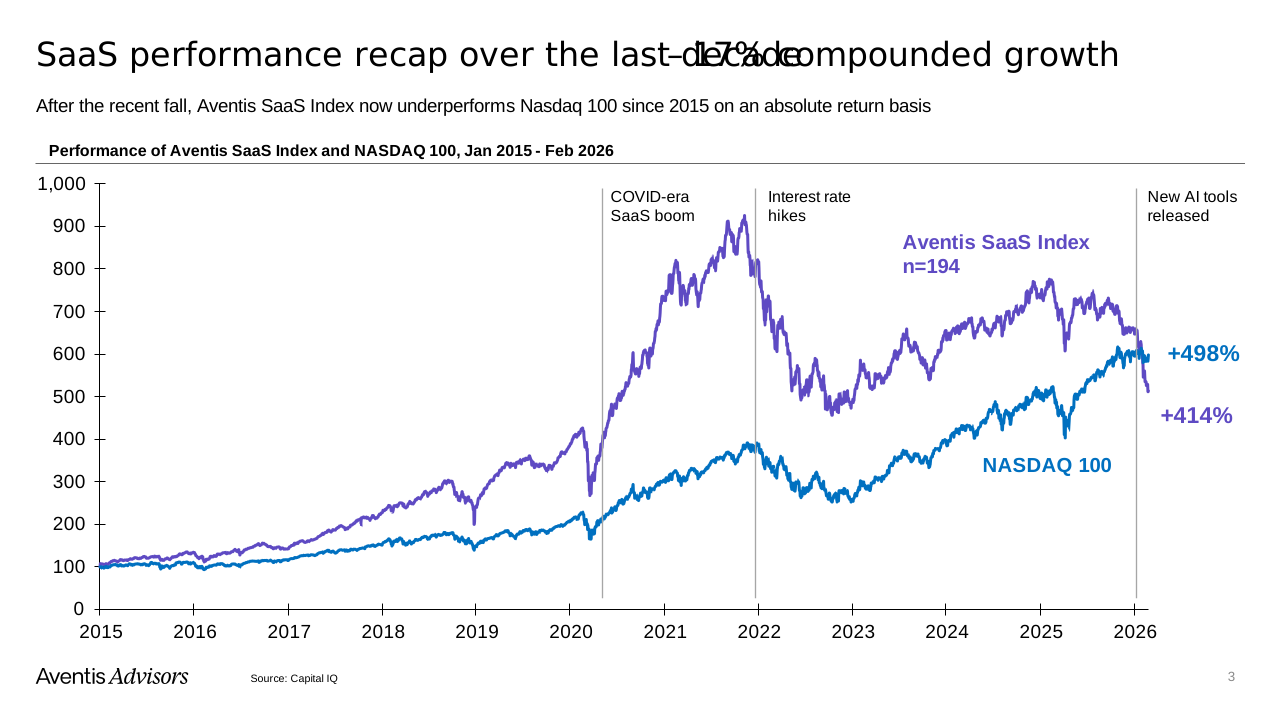
SaaS used to be the darling of Wall Street. And now it is not. Our take, honestly, is that it never should have gone so high. We always looked at those valuations with anxiety and doubt, because a lot of unprofitable companies in slow growth were quoted at 10, 15, sometimes even 100 times revenue multiples, without a clear path to profitability to justify them.
What we are seeing now is more of a market correction going back to fundamentals. We do not think it is dramatic – it has been long overdue, and it was looking for a trigger. That trigger came in the form of AI coding agents that hold the promise to replace parts of the software ecosystem. Whether that turns out to be true is a separate discussion, but it accelerated the repricing of a sector that was already carrying excessive valuations.
Filip Drazdou:
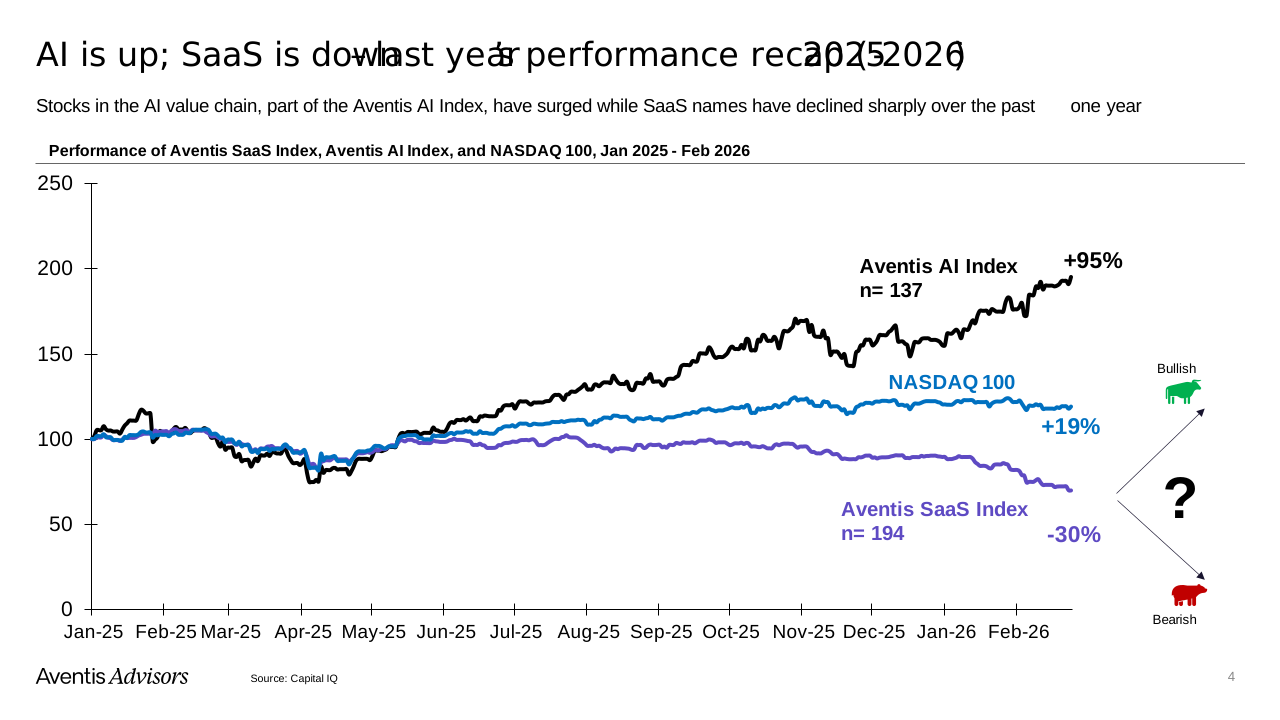
One important point: AI and SaaS used to move in tandem on NASDAQ. Around May last year, we started to see a disentanglement. Our AI supply chain index and our index of 194 SaaS companies diverged – first gradually, then more and more sharply. Investors who previously saw AI and SaaS as adjacent, even complementary, now see them as competing. The AI boom used to benefit SaaS; now everyone thinks otherwise.
Another explanation I find compelling is the terminal value problem. SaaS companies that are currently unprofitable derive most of their valuation from their expected value in 5 to 10 years’ time. And now, with AI, everyone is asking: what is the terminal value of a SaaS company? Will it even exist in a decade? Even for a massive company like Adobe, you have to ask yourself – will Photoshop be needed in ten years? That uncertainty is compressing valuations in a very direct way.
Bullish vs. Bearish: Where Do We Stand?
Marcin Majewski:
I want to make the bullish case. Looking at the whole technology supply chain, I think there is still room for SaaS companies to be the middleman between the end customer and the platforms that facilitate AI development. Why would every company build their own software with AI – expensive, constrained by compute and energy – when they can still rely on software vendors who do it for them at lower cost, with more functionality and more standardization?
SaaS companies will actually be among the primary beneficiaries of AI development. They will be more nimble, easier to adapt, able to build new functionalities faster. The risk is that you never know which company will succeed. Today’s incumbents might not be able to reinvent themselves quickly enough – like Kodak. But if you can find the gems that embrace AI and are willing to disrupt themselves, even throwing away their current codebase to rebuild on a modern tech stack – those companies have enormous upside.
What will change structurally is that SaaS companies will become more capex-heavy and less reliant on labor. That is a new modus operandi for the sector. There will be turmoil. But for those who adapt, the value can be extraordinary.
Filip Drazdou:
I am presenting the bearish case. The change in narrative is what is most dangerous here. All those SaaS companies traded at 20x revenue because the narrative was there – technology, COVID, everyone moving to the cloud. Once that narrative flips, it is very hard to come back. A single newsletter by Citrini Research, for example, moved the market significantly. The sentiment has shifted, and now SaaS companies are competing with AI for every technology dollar.
Buyers are asking: do I invest in AI, buy API credits for OpenAI, build something with a vibe-coding tool – or do I pay for the SaaS subscription? That is putting downward pressure on SaaS revenue and pricing. At the same time, to stay relevant, companies now need to invest more in R&D than ever, just when many of them thought they were finally past the investment phase and heading into high-margin territory. I would not be surprised if, in one or two years, most SaaS companies trade at EBITDA or P/E multiples in line with traditional businesses growing at 10% with 15% margins.
SaaS Fundamentals: Growth, Profitability, and Multiples
Filip Drazdou:
Looking at where we are year-to-date, AI supply chain companies are up approximately 26% – powered by big capex commitments from the hyperscalers, while SaaS is under significant pressure. The bifurcation is real.
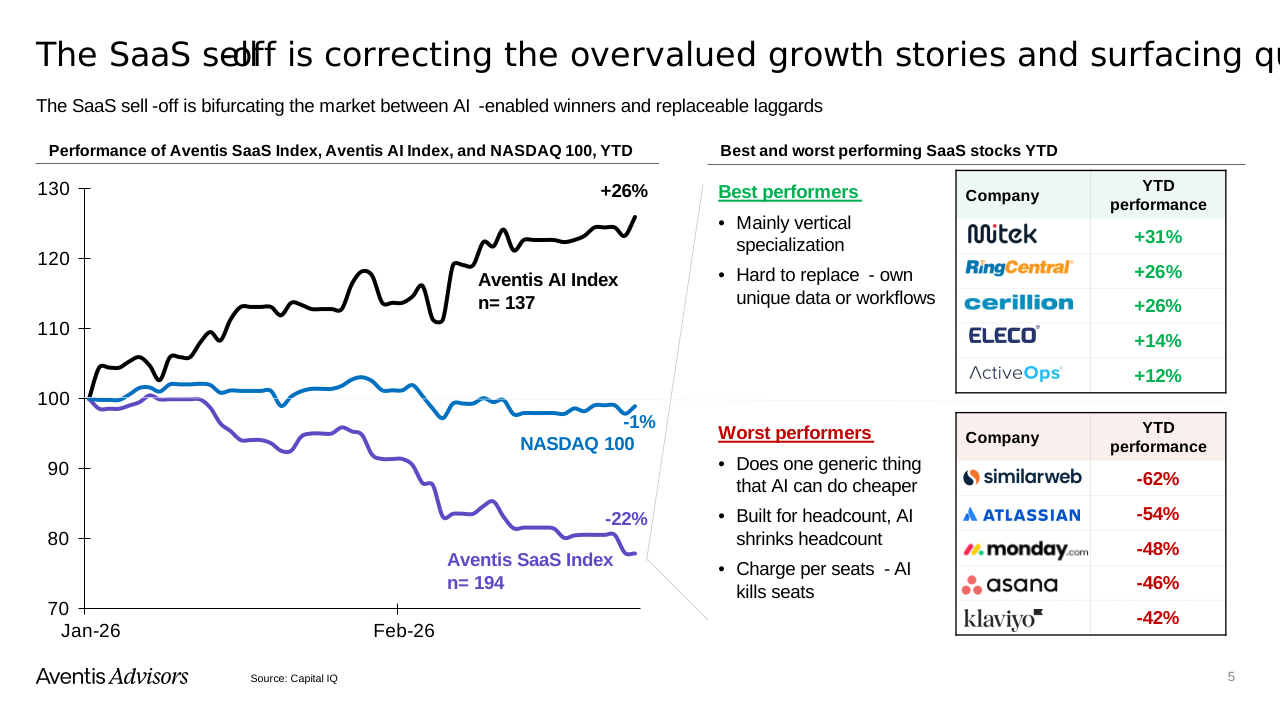
Among the worst performers in our SaaS index year-to-date: Atlassian, Monday.com, Asana. These are project management tools – essentially visualizations of a simple database. Tasks, timelines, Gantt charts. People believe AI can replicate these easily.
Among the best performers: smaller, less well-known, vertically focused companies. Businesses operating in telecom, identity management, and mission-critical workflows. That is where we are seeing SaaS remain more stable.
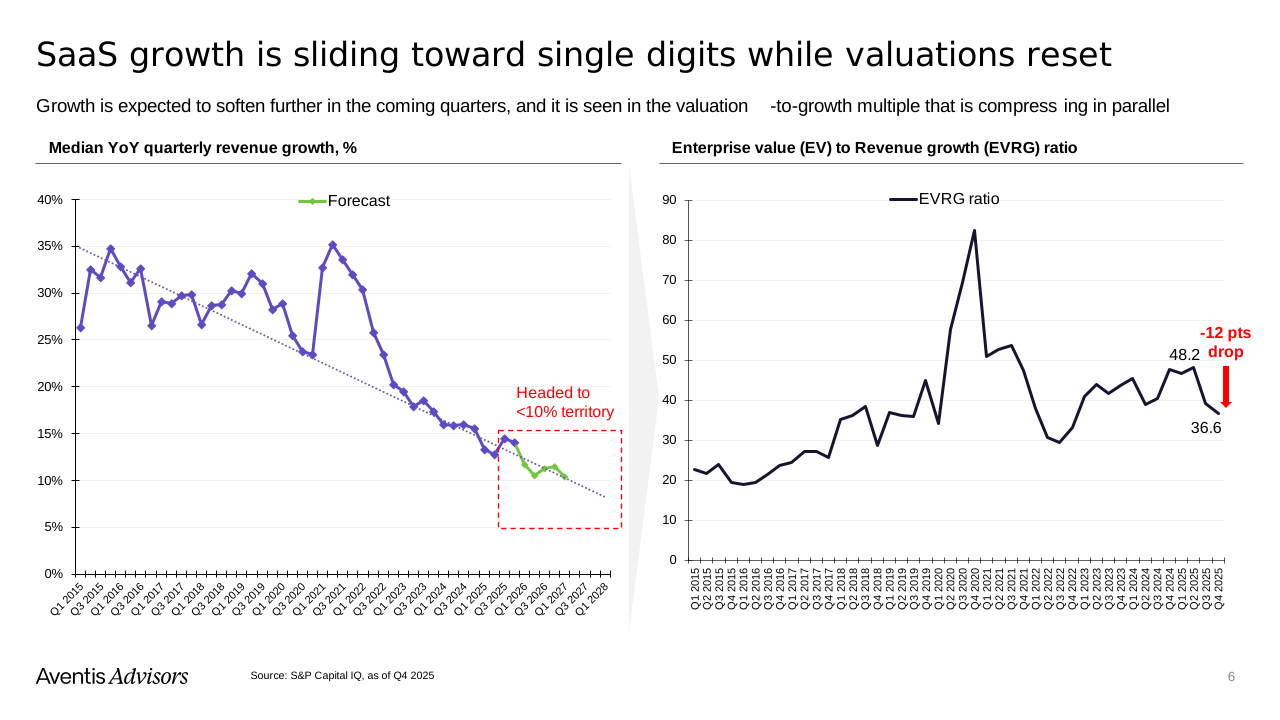
Revenue growth across the sector has been declining for around three years – since COVID, really. This year, companies are guiding for under 10% growth. That is why revenue multiples are increasingly hard to justify. The good news is that profitability has been improving – EBITDA margins are rising. Block laying off 40% of its staff made headlines, and the market rewarded it with a big stock jump. We expect margins to continue improving, even as revenue growth remains muted.
Marcin Majewski:
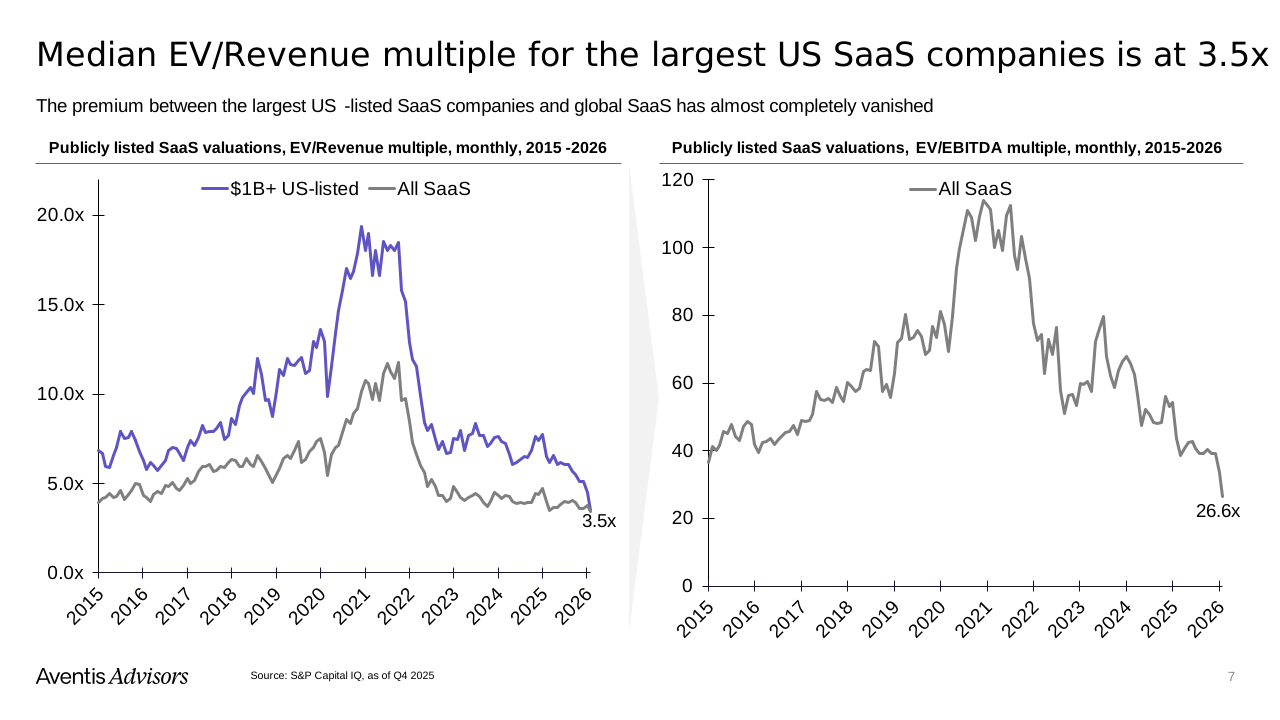
One development worth flagging: EV/EBITDA multiples are now the relevant metric for SaaS – something that was almost never said before. Our index is currently trading at around 26.6x EBITDA in aggregate – fairly reasonable by historical standards, broadly in line with traditional economy businesses. For the first time since we started tracking this in 2015, US SaaS companies no longer trade at a premium to global SaaS. That is a major shift.
For non-US markets, the picture is a little different. Local-market SaaS companies outside the US are somewhat less exposed to AI risk, partly because they cater to more local audiences and AI adoption is lagging behind the US and China. But we expect the impact to spread.
AI’s Three-Phase Disruption of SaaS
Marcin Majewski:
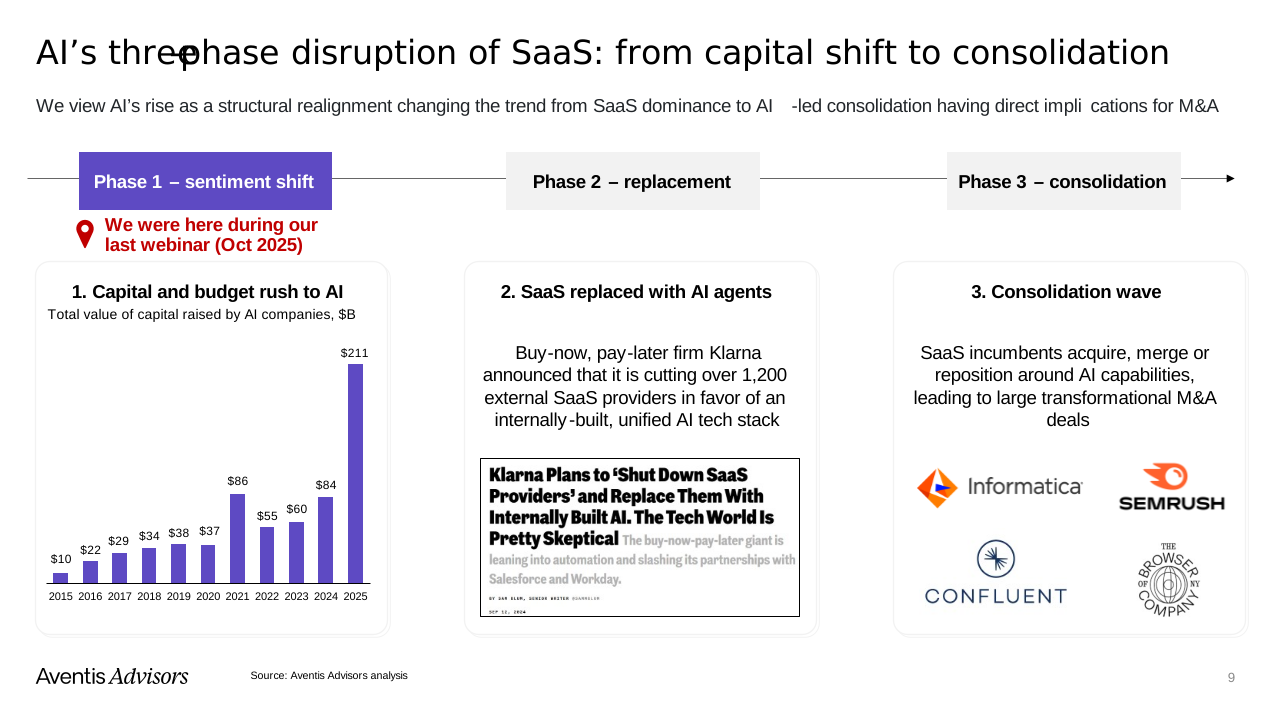
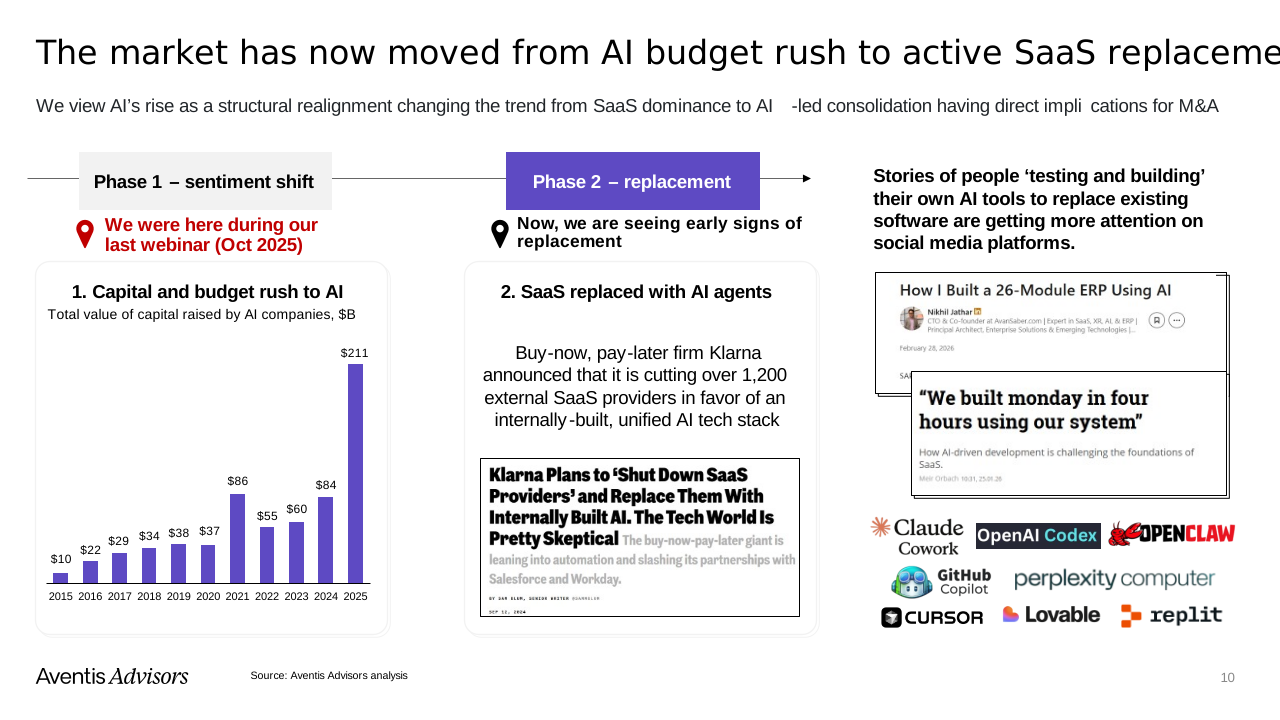
In 2025, AI companies raised $211 billion. That is a clear sentiment shift. And what we anticipated, and what is now happening – is that SaaS products are gradually being replaced by AI agents. People are taking tools like Claude and building replacements for products like SAP Business One. Whether this happens fast or slow is hard to say. Barriers to entry are still real. We are exploring this ourselves, and it is harder than it looks. But it is definitely coming.
Our hypothesis is that many SaaS companies will follow what Palantir does – deploying forward-deployed engineers who build bespoke solutions for each customer, rather than selling standardized packages with some customization. If I had a vendor who could do that for me at the right price, I would still prefer to pay them. The question is whether today’s SaaS companies can evolve their model in that direction.
Filip Drazdou:
Before, we assumed SAP was immovable – that it would be there for 20, 50 years. Now that assumption is being tested. When ChatGPT launched, people said it wrote poorly and would not amount to much. Today, there is almost no text written on the internet without AI involvement. The technology trajectory is clear, even if the timeline is uncertain.
How Buyers Are Thinking Differently: The AI-Era Due Diligence Framework
Filip Drazdou:
In our own transactions, we are seeing more and more buyers ask: “How is this business addressing AI disruption risk?” And more deals are getting disqualified on that basis alone. Every classic SaaS valuation factor now has an AI-era question alongside it.
Business model: Can pricing adapt from seats to outcomes delivered? Seat-based pricing is under pressure – both because AI may reduce headcounts at customer companies, and because buyers increasingly want to pay for results, not users.
Replaceability: Can a startup replicate your product cheaply and quickly with vibe-coding tools like Lovable or GitHub Copilot? Anything that is easy to replicate is now a significant liability.
Churn: Churn used to be one of the most predictable SaaS metrics. That assumption no longer holds – new AI-powered alternatives can emerge and capture customers faster than before.
Customer acquisition: Traffic is being disrupted by AI-driven search overviews. Companies now need to invest in AI-optimization strategies to ensure their product gets recommended by AI tools, not just ranked by Google.
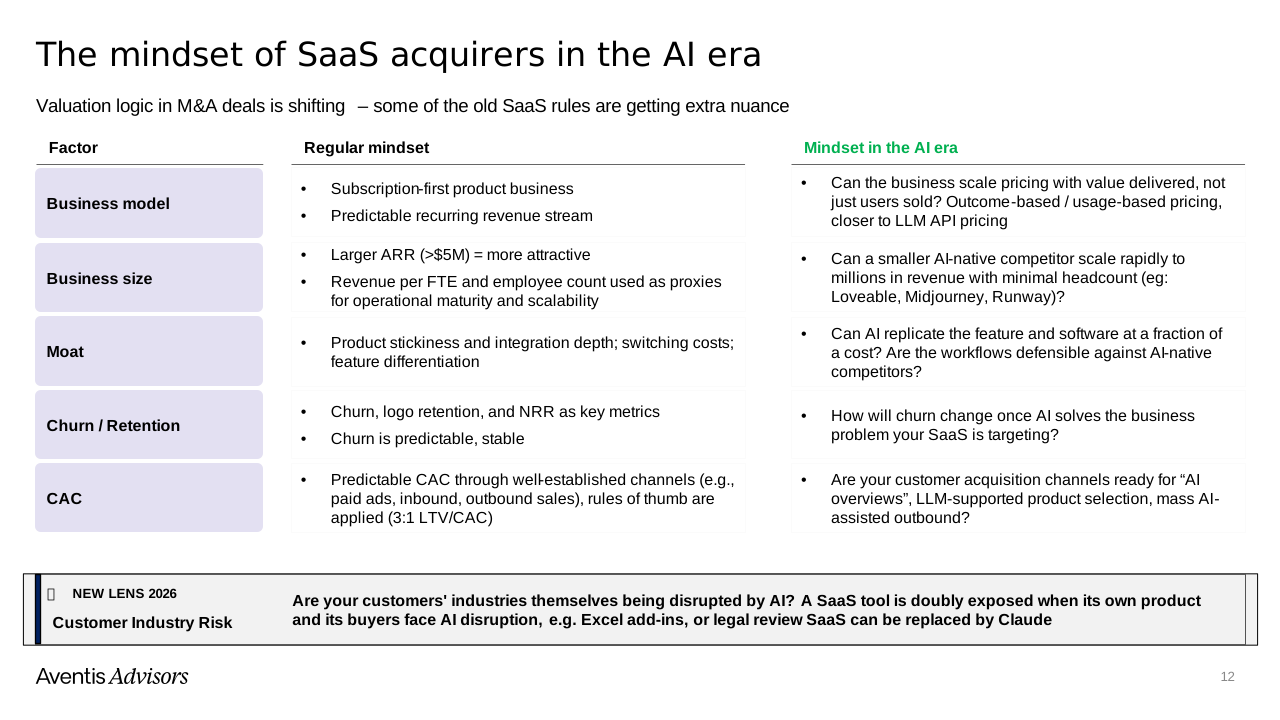
There is also a new lens specific to 2026: are your customers’ industries themselves being disrupted by AI? Seat-based SaaS companies that grew through positive net revenue retention – adding more seats as clients expanded – are now facing the reverse. As clients optimize headcounts, they will have fewer seats per account. That is a structural headwind baked into the business model.
How Exposed Is Your SaaS Business to AI?
Filip Drazdou:
We have been using a framework developed by SaaS Capital to assess AI disruption risk. It scores any SaaS business across three dimensions on a 1 to 4 scale.
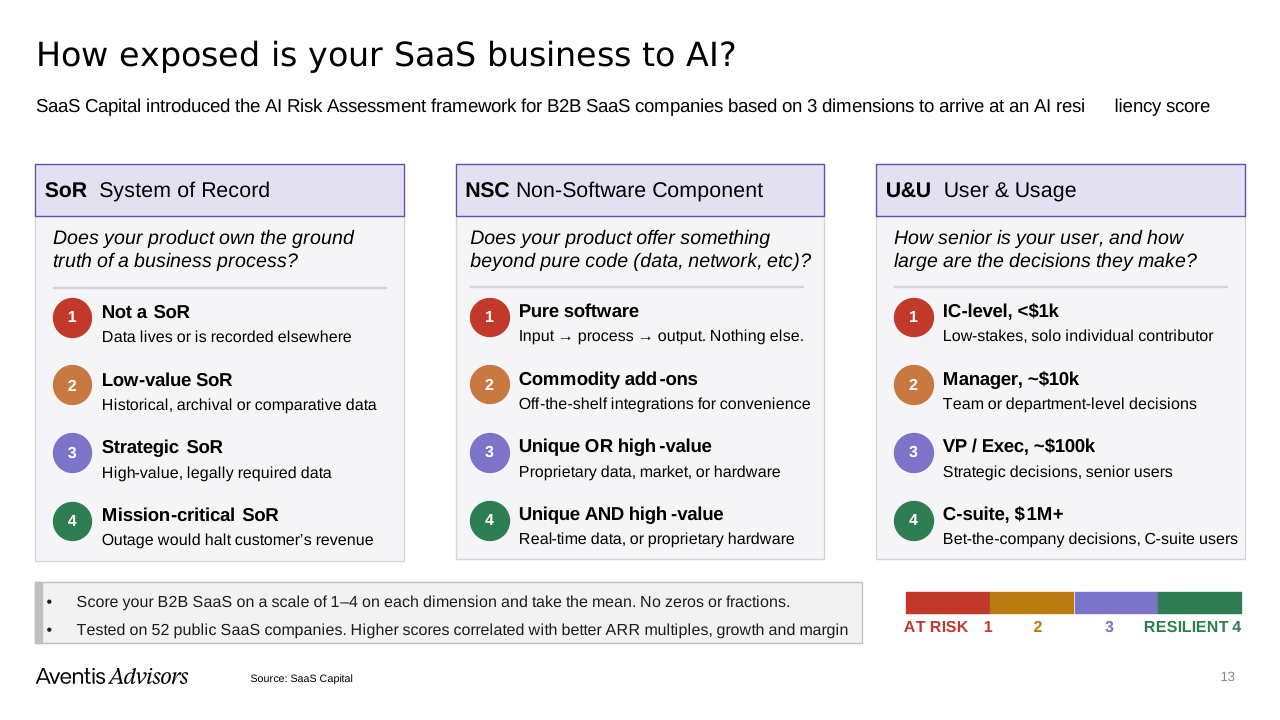
System of Record: Does your product own the ground truth of a core business process? A score of 1 means the data lives elsewhere, you are just a layer on top. A 4 means your product is a mission-critical system of record whose failure would halt operations entirely. Think of an inventory and pricing platform for an e-commerce business – if it goes down, you cannot take orders or fulfill deliveries.
Non-Software Component: Is there anything beyond pure software that differentiates your product? Before AI, pure subscription revenue was the gold standard. Now, non-software components – especially proprietary data can be a meaningful competitive moat. A 1 means your product is pure software with no proprietary data advantage. A 4 means you hold unique, high-value data not available anywhere else like telecom billing data or Bloomberg’s bond pricing.
User and Usage: How senior are the users, and how significant are the decisions made through the product? A 1 means front-line, individual contributor usage that can be swapped easily. A 4 means C-suite executives log in daily and use the product to direct million-dollar budget decisions.
Any business averaging below 2 across these three dimensions is at high AI disruption risk. Anything averaging above 3 has significantly longer shelf life. We would encourage every SaaS founder and investor to apply this framework to their own portfolio.
Marcin Majewski:
On the question of regulated industries: companies in banking, compliance, energy, utilities, and defense are less exposed, for sure. The replacement cycle is very long. In the disruption framework, they score highly on “system of record” simply by virtue of regulation – financial software that processes transactions needs to be bulletproof, not “90% correct” like AI can sometimes be. That is a real barrier.
M&A Outlook: What to Expect in 2026
Marcin Majewski:
IPOs? Very few. Valuations have fallen, and the market is not ready. But M&A? I think it is going to be a great year. We are already seeing activity at the larger end of the market – private equity exits, large-cap consolidation. At the small-cap level, we expect a significant wave of ownership changes.
A lot of founders do not want to live with AI disruption risk on their own. If a business represents 90% of your net worth, navigating this shift is uncomfortable. But if you own 20 SaaS businesses, you can diversify and manage it. So I expect many founders will choose to sell to someone better positioned to handle the risk and there are buyers out there who can do exactly that.
Filip Drazdou:
On the impact of AI on on-premise software: the transition away from on-premise will continue, but some markets may jump directly from on-premise to AI-native products, skipping the cloud SaaS era entirely, like some countries skipped the PC era and went straight to mobile.
Marcin Majewski:
My take is slightly contrarian: on-premise software is actually more resilient than cloud SaaS in this environment. It is harder to replace. Mainframe systems are still running fine, and no one is touching them because they do not have to. You have to migrate to cloud before you can even consider AI agents as a replacement. So I would say on-premise faces lower AI disruption risk though it still faces the long-term cloud migration trend.
Strategies for SaaS Business Owners
Marcin Majewski:
This is the question everyone is asking. We see three viable paths, depending on where you sit on the disruption risk spectrum.
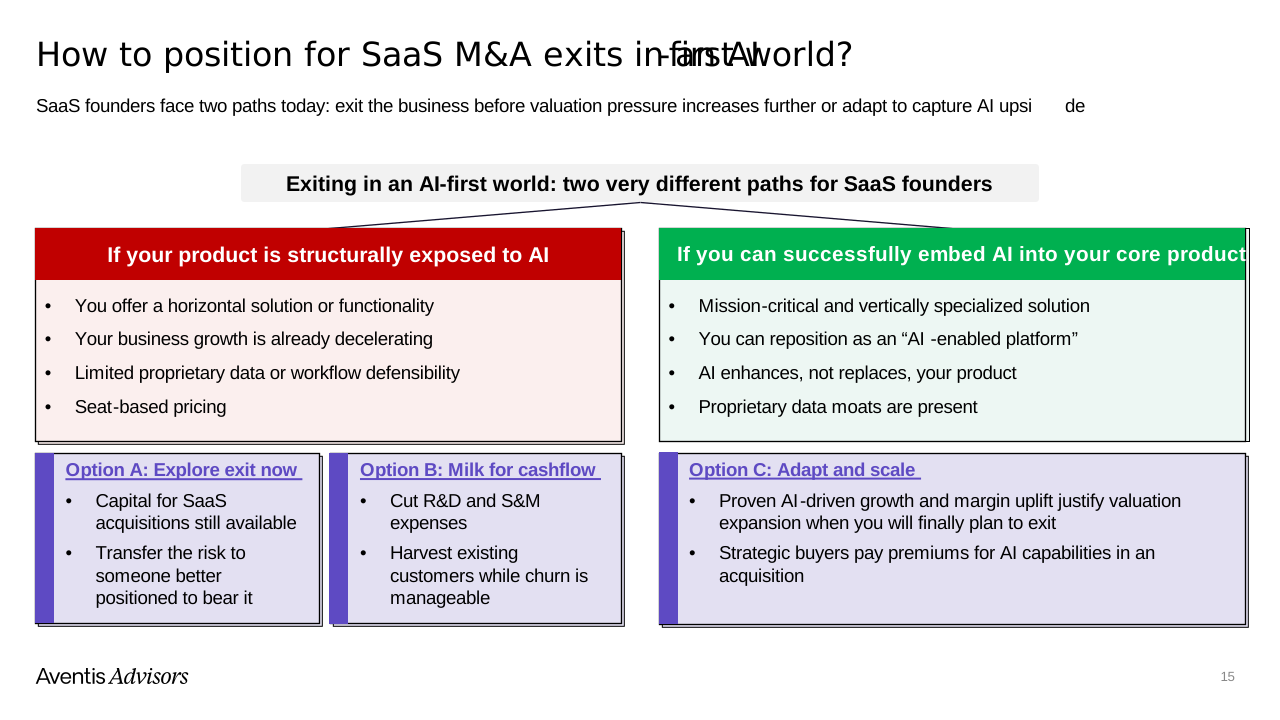
Option A: Explore an exit. If your product is structurally exposed to AI disruption, now is still a good time to sell. The AI threat is real but not yet fully materialized – right now it is a risk, not yet a confirmed problem. Valuations for software businesses remain sensible. There is still significant dry powder raised during the SaaS heydays. Transferring the risk to a more diversified buyer, or merging into something larger and more resilient, is a rational choice.
Option B: Optimize for cash flow. Cut R&D and sales and marketing expenses. Use AI as a development tool to reduce costs. For many companies this is more advantageous than fighting a battle they cannot win. Extract value from the existing customer base rather than investing aggressively to grow.
Option C: Adapt, embed AI, and scale. If you are mission-critical, vertically specialized, and can add AI features that create meaningful differentiation – this could be one of the greatest times for your business. The upside is potentially enormous. But it requires going back almost to square one: rebuilding on a modern tech stack, accepting that what you have built so far may need to be disrupted, changing the organization, and accepting all the resistance that comes with that. It requires founder-level conviction and sponsorship. It is a generational opportunity, but it is hard, expensive, and carries real risk.
Filip Drazdou:
All three options are viable, and all three are genuinely difficult. Selling means saying goodbye to your business. Cash flow optimization usually means headcount reductions. And adapting means assuming that your existing revenue is up for disruption and building something new. In terms of financial return, Option B can actually outperform Option C, because Option C carries far more execution risk. It all depends on the quality of the management team and the specific product.
Audience Q&A
On AI-driven customer attrition:
Filip Drazdou: I think the bigger effect so far is on new sales rather than on attrition of existing customers. Buyers are harder to close, they are tougher on pricing, and they are asking themselves: can we build this ourselves? The calculation of software ROI has changed.
On technical due diligence in the AI era:
Marcin Majewski: Tech DD is changing. A lot of “slop” will come to market, companies built quickly with AI-assisted coding that look successful on the surface but are very hard to maintain underneath. Buyers will pay much more attention to code quality and architectural robustness.
On professional services as a non-software component:
Marcin Majewski: Professional services used to be seen as a necessary evil – lower margin, not subscription, a drag on valuation. Now they may be a primary driver of retention. If customers are happy with the support they are getting, if the software can adapt to their needs through extra services – that is a big boost to long-term revenue sustainability.
Filip Drazdou: On our disruption scoring framework, strong professional services components would score around 2 – not a dominant differentiator like truly proprietary data, but meaningfully better than pure software with no services layer.
On number of customers vs. mission-criticality:
Marcin Majewski: The number of users matters less than how mission-critical the product is and the size of the accounts. I can imagine a business with only five customers that faces virtually no AI disruption risk if those customers are, say, a telco, a social security institution, and a compliance-driven enterprise. On the other hand, a MarTech SaaS competing with a thousand similar products is extremely exposed.
On whether AI will enable new SaaS use cases:
Marcin Majewski: Yes, I buy this completely. AI can enable SaaS companies to solve problems that were previously too complex or unprofitable to address with traditional coding. If SaaS companies can reposition as partners who help clients solve long-unaddressed problems, that is a big win. The AI era is not purely a threat; for the right companies, it is a massive enabler.
If you are considering any type of M&A transaction in the SaaS space, whether as a buyer, seller, or investor, we would encourage you to get in touch and speak with us directly.